
Navigating Crises, Forging a Future: Hamilton’s Enduring Strength
Submitted By Brian Roulston
It’s easy to look at the headlines today—trade tensions between Canada and the United States, shifting global economies, and concerns for vital industries like steel—and feel a bit uncertain about Hamilton’s future. But for many of us who’ve called the “Ambitious City” home this feeling isn’t entirely new. We’ve been here before. Long before the industrial giants of the post-war era began to falter, Hamilton confronted two other major economic crises that, despite their potential, ultimately failed to permanently alter the city’s trajectory.
The 1862 Hamilton City Bankruptcy: Railway Woes
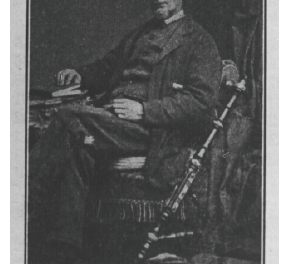
In 1862, the city encountered a period of bankruptcy. In short, this largely stemmed from its substantial investment in the Great Western Railway, a venture that was undermined when the Canadian government favored the rival Grand Trunk Railway. Compounded by the economic depression of 1857-1862, Hamilton’s population plummeted as people left the 16-year-old city for a better life elsewhere. Hamilton found itself defaulting on interest payments for bonds largely held by British investors, who insisted on immediate settlement. The city was in arrears for $2 million, a phenomenal sum for the time. Many of Hamilton’s services were cut or items like a fire engine, the mayor’s chair, desks, and other city owned objects were sold off to the highest bidder. A sombre mood hung over the valley. The Sheriff’s office hosted the auction, but people in the city were encouraged not to bid in order not to feed the investors looking to reap the money they were owed on the bonds. The air at the auction was heavy, and a profound silence fell like a shroud, almost as if it were a funeral. The auctioneer’s voice boomed, calling out numbers like a song, as the clap of the hammer sealed the fate of each item. Hamilton’s eighth mayor, James Cummings who served in the early months of 1854, bought most of these items and kindly loaned them back to the city.
Hamilton’s streetlights operated on gas. The gas streetlights were introduced in 1850. The lamplighters were told not to light the white globes to save money. The Gore Park fountain’s pump, perhaps steam-driven, had fallen silent for the first time since Prince Edward visited Hamilton and officially unveiled the fountain on September 14, 1860, two years earlier.
This period witnessed the failure of several foundries, including D.C. Gunn Locomotive, established in 1853. Gunn closed his shop in 1857, and other machine shops connected to the Great Western Railway also ceased operations. Additionally, established wholesalers were forced to close their accounts.
Henry Beasley, for whom the Beasley neighborhood is named, famously removed the tax assessment rolls to temporarily protect the city from its creditors, thus preventing a surtax on residents to recover their money.
Despite wage cuts and layoffs, some manufacturers, especially those producing farm implements and stoves, persevered. The textile industry, already experiencing modest growth, was bolstered by Richard Wanzer’s sewing machine factory and Eli Sanford’s introduction of the ready-made clothing industry. This enduring spirit laid the groundwork for the manufacturing industry to later revitalize. The advent of inexpensive, accessible hydroelectric power from the Power Glen Plant in Decewsville, in the Niagara region, in the late 1890s, ignited a new period of expansion.
The Great Depression’s Grip
The Great Depression, which began in 1929, also significantly impacted Hamilton. During this period, 51% of men and 33% of women in Hamilton lost their jobs or experienced drastic reductions in working hours, a higher rate than any other Canadian city except Windsor.
In response to widespread unemployment, governments across Canada implemented ‘relief’ programs for men. During the 1930s, “relief programs” were ways the government tried to help people who had lost their jobs and had no money because of the Great Depression. They often gave out food, shelter, or small payments, and sometimes offered “work-for-relief” jobs on public projects instead of just handing out cash. It was a basic lifeline for those struggling to survive. Hamilton funded a two-million-dollar work-for-relief program in 1930. This initiative led to the completion of various civic projects, including the city’s northwest entrance and rock garden, a maternity hospital constructed on the site of the earlier Mount Hamilton Hospital (now known as Juravinski Hospital or Henderson Hospital), sewer installations, playground construction, road construction, and alleyway paving, all carried out by unemployed laborers.
Despite the widespread economic hardship, the majority of Hamilton workers were not severely distressed or prone to dissent, as some accounts of Canadian workers during the Depression suggest. Most workers either saw protest as wrong or simply lowered their expectations for finding secure work. While there were waves of strikes and political unrest across the country, the vast majority of Hamilton workers were not directly involved.
Great War Ends the “Dirty Thirties”
The First World War ultimately transformed Hamilton’s industry. Local factories retooled for war production almost overnight, effectively ending the long decade known as the ‘Dirty Thirties’ and sparking another resurgence for the city during the Second World War.
The Late 20th Century: A New Test
From the late 1970s well into the 90s was a time of profound change. It was a period that truly tested the spirit of this “workingman’s town”. The post-war ideal—that a factory job guaranteed a lifetime of employment, even for those with only a Grade 8 education—started to crumble. Facing global competition, the industrial giants of the era that had employed your father and his father and maybe even his, started closing their doors.
Companies as Communities: The Echoing Names
Many of our Breezes readers will remember. These weren’t just companies; they were communities, woven into the fabric of our neighbourhoods and families. In a sense, to the employees their workmates were like a second family. It felt like a relentless wave. The names still echo like ghosts in the hall:
Otis Elevator (1987)
Firestone Tire & Rubber (1988)
International Harvester (1992)
Canadian Westinghouse, once the city’s largest employer, shut its doors in 1997.
Procter & Gamble followed in 1998.
It was a tough time. Some called it a “death blow” to the old way of life. Pundits worried Hamilton might become a “mirror image” of American rust belt cities like Detroit, Pittsburgh, Buffalo or Philadelphia.
New Technology and Industry Shifts
The late 20th century saw the rise of affordable new technology, largely manufactured in places like Japan. This, coupled with many industries relocating to Toronto, made Hamilton appear outdated and archaic. But that’s not what happened. Hamiltonians, true to character, held onto their “gritty urban identity”. We refused to give up on our city. That same resilient spirit, the one that saw the community band together to build Hamilton Place back in the early 70s when governments said no, was still alive.
Adapting to New Horizons, Growth and New Opportunities
Slowly, painstakingly, the city began to adapt. The loss of those big industrial jobs forced Hamilton to look towards new horizons. New opportunities emerged in areas our parents might never have imagined. And that brings us to today. The latest numbers from 2024 show a Hamilton transformation. While manufacturing still plays a vital role (employing around 41,400 people in the Hamilton area – including Burlington and Grimsby – in 2024), it’s no longer the only game in town.
The “Eds and Meds” Economy
Let’s have a look at where the growth is now, according to 2024 figures: Professional, Scientific, and Technical Services saw huge job growth, employing over 46,600 people locally.
Educational Services also boomed, employing 38,500 people, with McMaster University being a top hirer.
Health Care and Social Assistance remain a massive pillar, employing nearly 55,800 people. Hamilton Health Sciences alone employs almost 13,000 people. Interestingly, even with a slight dip in the total number employed in health care recently, the demand is still huge – hospitals are constantly hiring, highlighting that the challenge now is finding enough skilled workers.
A Legacy of Resilience
The seeds planted during those challenging years began to grow. We saw the rise of what people now call the “Eds and Meds” economy – our world-class hospitals and educational institutions became major employers.
Facing Today’s Challenges with Enduring Strength
From the railway woes of 1862 to the industrial shifts of the late 20th century, Hamilton has consistently demonstrated an extraordinary capacity to adapt and thrive. It’s not going to be easy, but it will be worth it. Today, as the “Eds and Meds” economy flourishes, the city continues to write its narrative of progress, proving that its enduring spirit is not merely a relic of the past, but a vibrant force shaping its promising future.