
 By Prof. Rowr (AKA Brian Roulston)
Rowr! Electric cars aren’t just a global trend—they’re part of Canada’s transportation story. From the first electric vehicle built in Toronto in 1893 to today’s Teslas, Leafs, BYD models, and Canadian‑made electric buses and trucks, the science behind them is surprisingly simple and endlessly fascinating. Let’s explore how they work, why they matter, and how electric vehicles fit into Canada’s future.
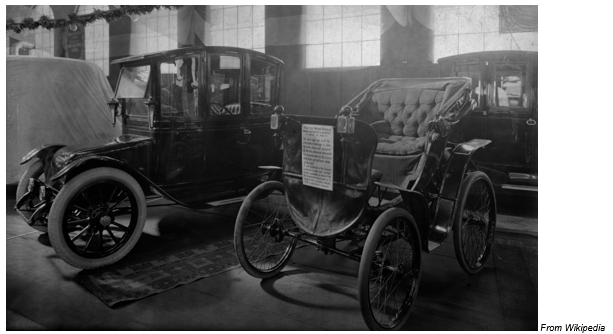
A Steed Ahead of its Time The Fetherstonhaugh Electric, built in Toronto in 1893, was a true pioneer. This 700‑pound carriage had a padded bench seat, a 4‑horsepower motor, and could reach 24 km/h for about an hour on a charge. It even had electric headlights and rubber tires—luxuries for the era. Its inventor, Frederick Fetherstonhaugh, drove it for 15 years and proudly showcased it at the Canadian National Exhibition on two occasions, 1893 and 1898.
A Brief Canadian History of Electric Cars In the late 1800s, electric carriages were more common than gasoline cars in parts of Ontario and Quebec. They were quiet, clean, and easy to start. But by the 1920s, cheap gasoline and the invention of the electric starter pushed these so-called electric carriages aside. Their limited range—about 40 km—also made them better suited for short in-town delivery trips. Interest returned in the early 2000s as climate concerns grew. Quebec and British Columbia led with early incentives, and Hydro‑Québec invested in charging technology. Today, Canada is a hub for electric-vehicle innovation. Lion Electric builds electric school buses, Edison Motors develops hybrid heavy trucks, and CanEV produces the Might‑E Truck. International players like BYD have also established a strong Canadian presence.
A Fast‑Changing EV Landscape The EV world is shifting faster than a squirrel spotting a peanut. As global trade tensions rise and EV prices fall, Canada is adjusting its strategy to keep vehicles affordable and attract investment. While the U.S. imposed steep tariffs on Chinese EVs, Canada kept its 6.1% rate, encouraging companies like BYD, NIO, and XPeng to explore Canadian partnerships. At the same time, provinces and municipalities are racing to expand charging networks and upgrade electrical grids. A new federal strategy focuses on stricter emissions standards, time‑limited rebates, and support for Canadian battery production and recycling. The landscape is evolving quickly—but Canada aims to stay competitive while keeping EVs within reach for families and seniors.
Types of Electric Cars: Powering Up Our Future! When people talk about electric cars, it can sound like there are dozens of kinds. Really, the main star is the All‑Electric Car, also called a Battery Electric Vehicle (BEV). These cars run only on electricity stored in a big battery under the floor. No gas tank, no exhaust pipe, no engine noise—just smooth, quiet driving. Other cousins include: Plug‑in Hybrids (PHEVs): Short trips on electricity, longer trips on gas. Hybrids (HEVs): Gas engines with small electric helpers—no plugging in. Fuel‑Cell Vehicles: Hydrogen‑powered, but rare in Canada. But for most drivers, BEVs are the cleanest, simplest path forward. Vroom, vroom!
The Battery: Our Future Gold Mine? The battery pack is the heart of every electric vehicle. Lithium‑ion cells store energy as chemical potential, ready to be released as electricity. Canada is rich in key minerals—nickel, cobalt, and lithium—giving us a major advantage in the global EV supply chain.
Canada’s “Battery Valley” In Bécancour, Quebec, companies are building a cluster of battery‑material factories in an area nicknamed Battery Valley. Ford and its partners are constructing a major cathode plant, while GM is building its own facility nearby. These projects mean Canada isn’t just mining minerals—we’re turning them into high‑tech components right here at home. Rowr! Jobs, innovation, and clean energy all in one place. Hydro‑Québec also leads the world in motor and power‑electronics research, helping shape the EV technologies used globally.
Giving EVs a Second Life: Recycling Batteries and Cars Rowr! EVs can recycle their energy and their parts. Most of an EV’s body—steel, aluminum, plastics—is recyclable, with recovery rates around 95%. And despite myths, EV batteries are recyclable. Up to 95% of valuable minerals like nickel, cobalt, and copper can be recovered. Because EV batteries last 10–20 years, large‑scale recycling is still growing. Canada is becoming a leader: Glencore’s Kingston plant is one of North America’s major battery recyclers. The NextStar Energy plant in Windsor even includes its own recycling centre, creating a “closed‑loop” system that keeps minerals in Canada. Rowr! A never‑ending cycle of clean energy.
The Motor: Silent but Strong Rowr! No rumbling engines here—just smooth, silent power. Electric cars work a lot like things many of us already know: mobility scooters, golf carts, and e‑bikes. A battery stores energy, a motor turns the wheels, and a pedal controls the speed. No gears, no exhaust, no fuss. EVs feel quick because their motors deliver instant torque—power the moment you press the pedal. Even everyday models accelerate confidently at traffic lights. Quiet, clean, and surprisingly zippy.
Where EVs Are Going EVs have fewer moving parts and tend to last a long time. Many modern EVs can reach 300,000 km or more. Gasoline cars have improved too, but EVs avoid wear on engines, exhaust systems, and transmissions. Rowr! Fewer parts, fewer problems.
Electric trucks are also arriving in Canada. Purolator and FedEx are testing electric delivery vans, and cities like Brampton are trying electric garbage trucks. These early projects help fleets learn how EVs perform in real Canadian conditions. Windsor rolled out Canada’s first electric streetcars in the 1880s, and Hamilton wasn’t far behind — our own electric streetcars arrived in the 1890s and stayed on the streets until 1951. After that, HSR kept the wires humming with electric trolleybuses right up to 1994. Today, cities across Canada are circling back to electric transit with new battery‑electric buses. Hamilton is getting ready too: a new Birch Avenue facility is being built to support electric buses whenever Council gives the green light. Rowr!
Power Electronics: The Brain of the System The inverter is like the EV’s brain, converting the battery’s Direct Current (DC) into Alternate Current (AC) for the motor. A controller manages how much of that current or power flows to the wheels, keeping everything smooth and safe. Without these components, the car wouldn’t move. Canadian companies like Dana TM4 design advanced inverters and motors used worldwide.
Regenerative Braking: When you slow down, the motor reverses and sends electricity back to the battery. In hilly areas like Hamilton and Dundas, regenerative braking can noticeably extend your range.
Charging in Canada Most Canadians charge overnight at home using a Level 2 charger installed by a certified electrician. On the road, Canada’s charging network is expanding quickly. FLO and Tesla Superchargers stretch from coast to coast, and Petro‑Canada has built fast chargers along the Trans‑Canada Highway, spaced roughly every 250 km.
Brrr! EVs and Canadian Winters Cold weather reduces range by about 15–30%, mainly because the battery and cabin need extra heat. Pre‑heating the car while it’s plugged in helps a lot, and modern EVs automatically manage their batteries to stay efficient. EVs also handle winter roads well. Their heavy batteries sit low in the vehicle, improving traction and stability. Many drivers say “one‑pedal driving” makes icy roads easier to manage. The Canadian Automobile Association (CAA) even offers mobile charging for stranded EVs, giving enough power to reach the nearest station.
How Long Does It Take to Charge? Charging can take 20 minutes to 12 hours depending on the charger. Level 1 (wall outlet) is slow. Level 2 (home or workplace) takes 4–12 hours. DC fast chargers can add up to 300 km in the time it takes to grab a coffee.
Fueling Up for Less! Charging at home is usually the cheapest option—often $6 to $15 for hundreds of kilometres. Fast chargers cost more, typically $15 to $36 for a full charge. Still, most drivers save money overall. Clean, quiet, and budget‑friendly!
Etiquette for Charging Rowr! Good manners matter. At a public charging station move your car when charged and never unplug someone else’s vehicle without permission. Sharing the plug keeps everyone moving.
Why It Matters for Canada We are blessed with clean electricity—hydro, wind, nuclear, and other renewables. EVs help reduce smog in big cities and support new jobs in mining, battery production, and vehicle manufacturing. A cleaner, quieter future is within reach.
A Final Word From early electric carriages to today’s cutting‑edge electric vehicles, Canada’s journey is one of curiosity, ingenuity, and steady progress. As we continue this electric transition, we’re not just changing how we get around—we’re helping build a cleaner, more energy‑independent, and prosperous Canada for future generations. Rowr! That’s the science behind EVs… so let’s zoom into the future together.