By Brian Roulston
January usually brings talk of Jack Frost nipping at our noses or frost heaving through the ground. Today we turn to a different kind of Frost. Not the mythical sprite of winter, but Harry Louis Frost, whose legacy is etched not in ice, but in iron and ambition. From fencing farms and ballparks to lining the Canadian Pacific Railway, Frost built more than barriers—he built a business. In 1898, he founded Frost Fence and helped shape Hamilton’s skyline with the creation of the iconic landmark: The Royal Connaught Hotel. This is the story of the man who fortified a city, one post at a time.
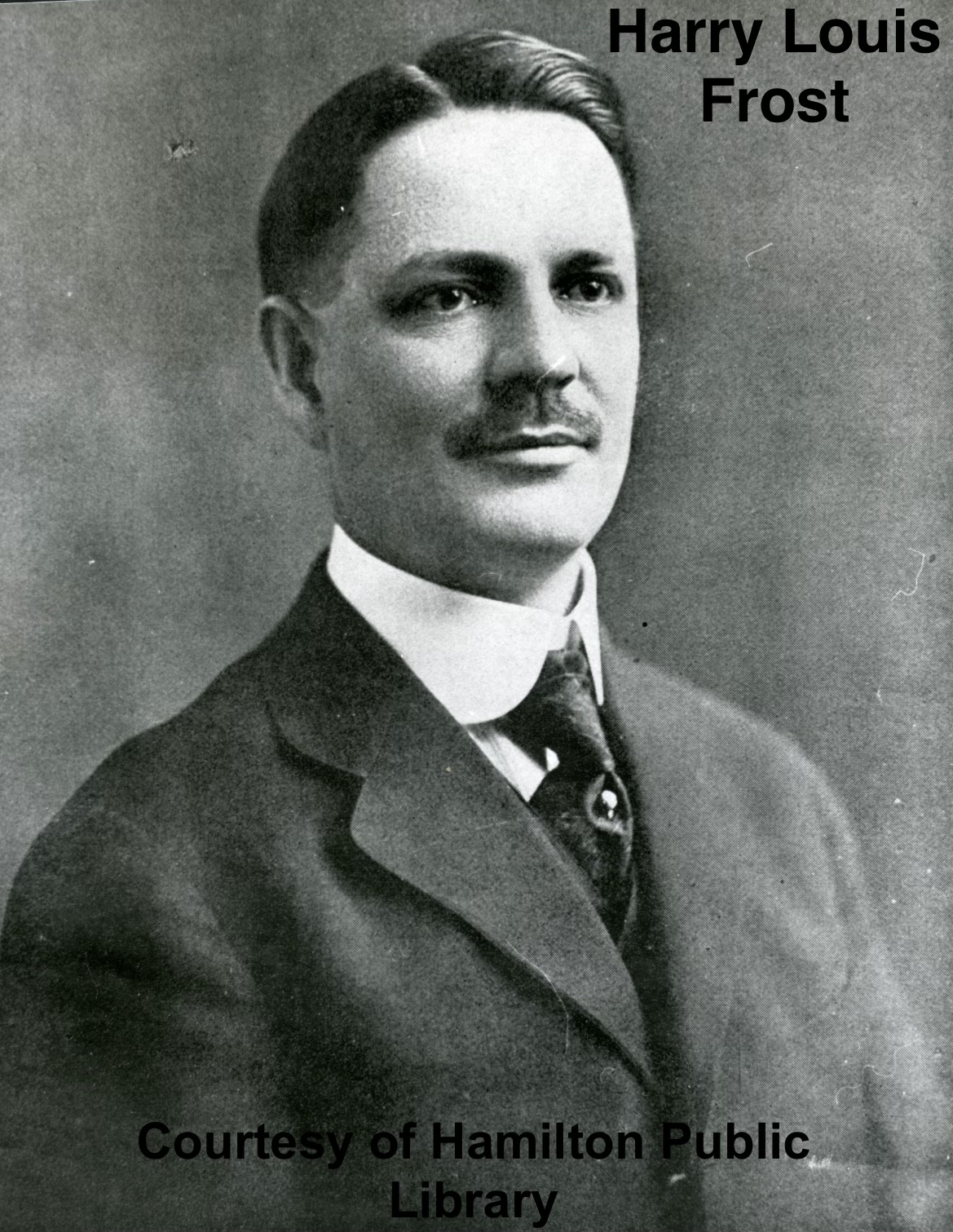 Frost was born September 18, 1874, in Danville, Knox County, Ohio and grew up in a close-knit family. Harry began his fencing career with the Jones National Fence Company in Columbus, Ohio, during the late 19th C. The company was known for its patented “Jones Locked Wire Fence” system, featuring a “stock proof lock” that was marketed heavily across North America. After a few years on the road as a traveling salesman, Harry, still a young man, struck out on his own. In 1898, he founded the Frost Wire Fence Co. in Welland, Ontario, as an offshoot of the Jones National Fence Company. By 1900, he had incorporated the company, ready to expand. He started operations in an old church but quickly moved into a new brick factory near the Grand Trunk and Wabash Railway lines. By 1903, Frost fencing was being installed around the Canadian Pacific Railway yards and along short stretches of track. Demand soared, and soon product shipped across the U.S., England, and even Australia.
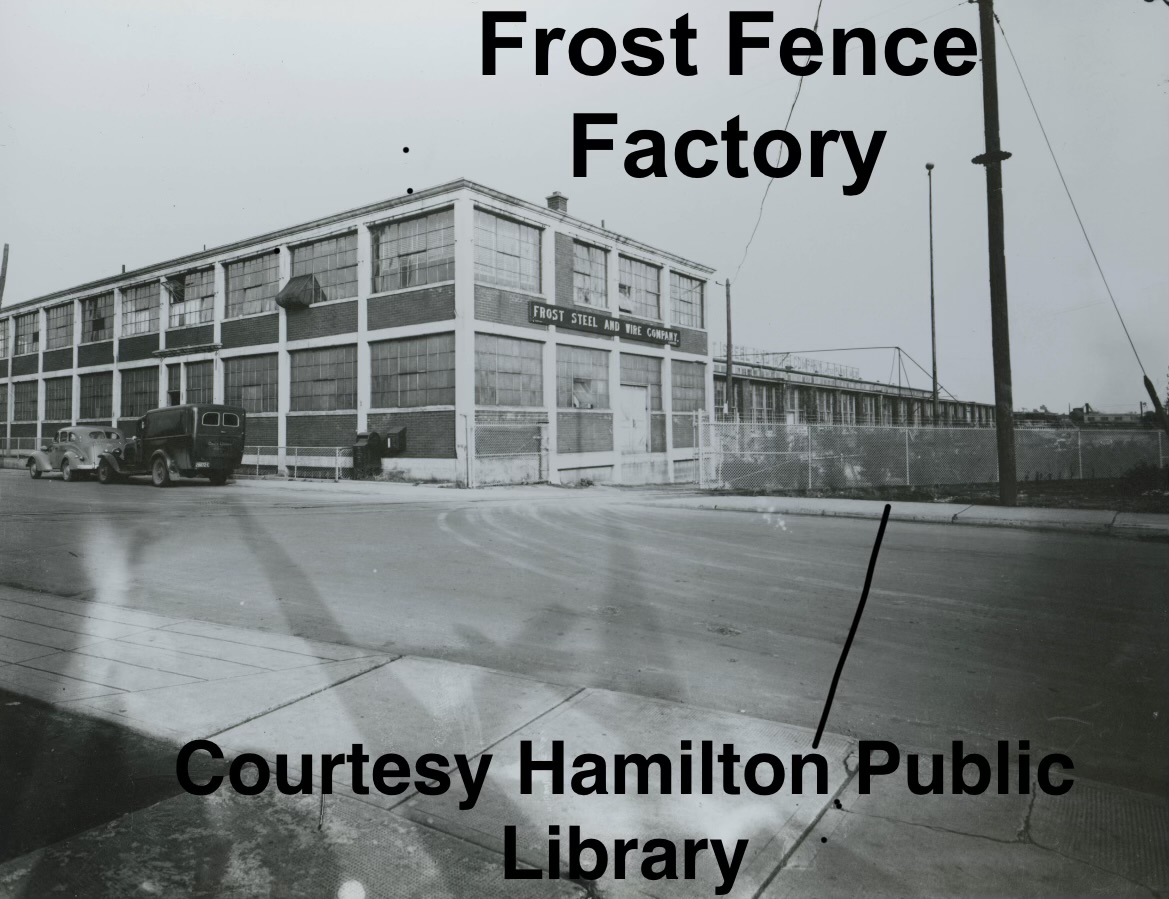
Harry Frost relocated to Hamilton’s industrial zone near Sherman and Princess Avenues, drawn by the city’s ample steel supply, abundant and affordable hydroelectric power. He was also a generous employer; in 1909 he leased a train car and sent his 30 employees on an all-expense-paid vacation to California. In return, they gave him a fine walking cane.
In 1915, Frost commissioned a grand residence at the southwest corner of James and Markland Streets, named “Markholme,” located at 1 Markland Street. It was designed by architect Gordon J. Hutton, later partnered with William Russell Souter to form Hutton & Souter. They shaped much of Hamilton’s architectural landscape, designing Robert Land Public School, Delta Collegiate, now the former Delta Secondary School, the second phase of the Royal Connaught Hotel and Christ the King Basilica. Today, Frost’s former home is RE/MAX Escarpment Golfi Realty Inc.
Harry Frost dreamed big, and Hamilton would never be the same. He proposed a lavish hotel that would stand toe-to-toe with Toronto’s finest, capturing the imagination of city officials and investors alike. By 1913, the old Waldorf Hotel was shuttered, cleared to make room for Frost’s million-dollar masterpiece, which started construction in 1914. The hotel’s name came from Alfie Richards, a young student who won a contest by suggesting “Connaught” in honor of Prince Arthur, Duke of Connaught. The Duke of Connaught granted the hotel permission to use the title “Royal” in its name.
The original 12-story Royal Connaught Hotel was designed in the Edwardian Classical style by Buffalo architects Esenwein & Johnson and constructed by Pigott Construction. While the famed Hamilton firm Hutton & Souter did not design the initial hotel block, they were responsible for the 1931 west-tower addition, an Art Deco expansion that added 200 rooms and ground-floor shops. HistoricalHamilton.ca confirms Pigott Construction as the main builder, highlighting its steel-frame, concrete-and-gypsum walls and floors that made it one of Hamilton’s earliest fire-proof “skyscrapers.”
The hotel officially opened on June 5, 1916, with marble staircases, elegant ballrooms, 244 guest rooms, and state-of-the-art amenities – electric elevators, electric clocks, telephones, and shoeshine parlors. At the time, Canada did not use star ratings for hotels. By today’s standards, the hotel would be considered a four-star establishment, comparable to Ottawa’s historic Château Laurier. The grand opening drew 300 dignitaries, including Lieutenant Governor of Ontario Sir John Hendrie and Hamilton’s 42nd Mayor Chester Walters. Several thousand Hamiltonians toured the new landmark that day.
In March 1918, while traveling to a wedding in New York, Harry Frost contracted the Spanish Flu and passed away on March 7. His funeral was held on March 11 at Hamilton Cemetery.
In 1915, Frost Fence merged with the Hamilton Anchor Company. A year later, the business was renamed the Frost Steel & Wire Company. In 1918, before Frost’s death, they introduced chain-link fencing to Canada, a major innovation in the industry. The company expanded again in 1922 by acquiring the property behind them, Banwell-Hoxie Fence Company. By 1937, Frost Fence was sold to the Steel Company of Canada (Stelco), which continued producing the brand until 1999. In 1999, the brand was sold to Advance Fence and Wire Company of Brampton. Sadly, just two years later, Advance Fence declared bankruptcy, bringing an end to the Frost Fence brand.
For five decades, the Royal Connaught was Hamilton’s heartbeat. CKOC radio broadcast from its 11th floor. It was the center of the community, hosting everything from elegant dances to civic functions. But in 2004, the hotel closed its doors and sat empty for nearly a decade. In 2014, two local developers, Rudi Spallacci (Spallacci Group) and Ted Valeri (Valery Homes), brought the Connaught back to its former glory. The goal, to preserve its historic charm while creating modern condominium style residences for a new generation of Hamiltonians. They invested over $45 million, restoring the Art Deco lobby with sparkling chandeliers and elegant columns. The newly transformed Residences of Royal Connaught officially opened on June 7, 2014. The transformation not only revived an iconic building, but it also helped kickstart a wave of renewal in the downtown core, the Connaught was a vibrant centerpiece of the city once again.