Rose Divecha
We happened upon our neighbours, Tim Owen and Carrie Butcher, standing at the end of their driveway recently, seemingly engrossed in something just out of our sightline. My husband Rob and I approached. “Hey, what’s up guys?” Rob asked.
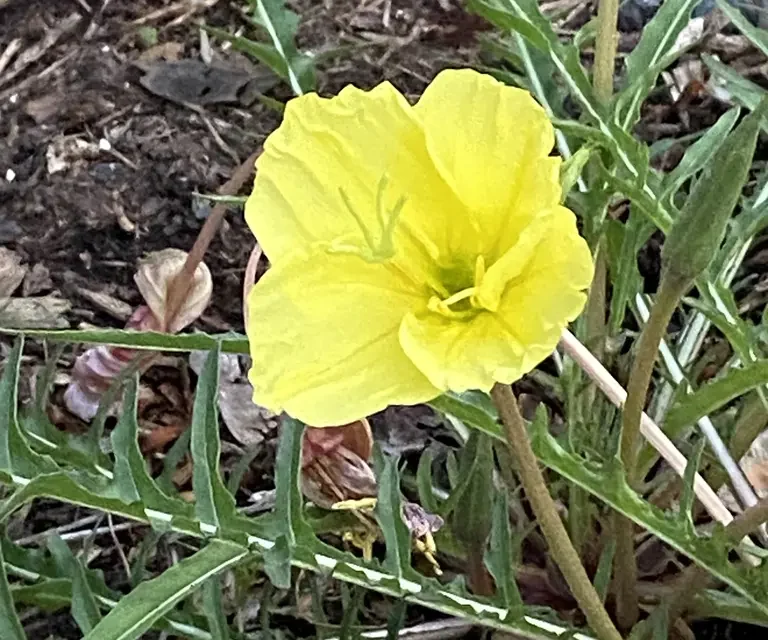
Tim and Carrie laughed, aware of how they must have looked, barely moving, transfixed on a small plant at the edge of their garden. “We were just watching our Evening Primrose open up,” Carrie replied.
Rob and I looked down at the dandelion-like plant with one yellow, golf ball-sized flower at its centre. Sure, it was pretty, but it didn’t look exceptionally remarkable to us until Carrie explained that the Evening Primrose blooms at dusk and its flowers only last twenty-four hours. She checked her watch. “Come back tomorrow, around 8:35,” she said, “there’s two more buds that should open up then.”
The next night we returned at 8:35 and waited with our neighbours, for about ten minutes until finally, the plant’s buds began to quiver ever so slightly. What we saw can only be described as a real-time botanical eruption. Picture a time-lapsed recording of a bloom unfurling, except it happens right before your eyes within seconds. The satisfaction was immediate. The experience unlike anything I had ever seen before. How could something so small cause a group of adults to ooh and aww in sheer delight?
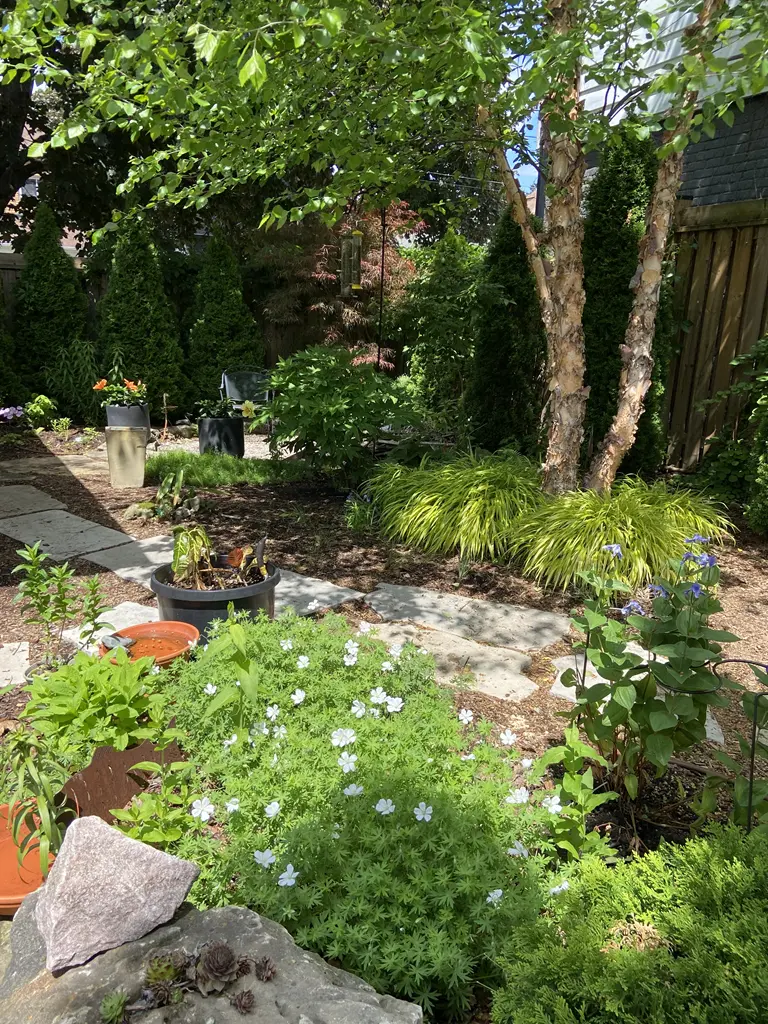
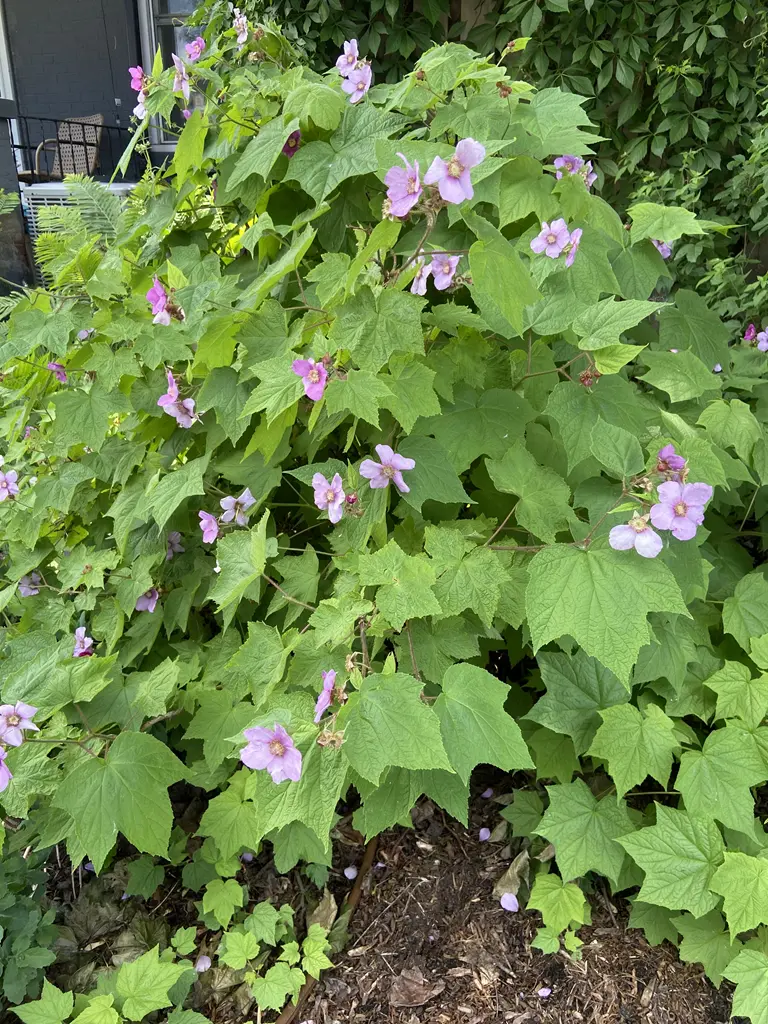
The encounter reminded me that unexpected moments abound in nature, even within the downtown city limits, especially with more homeowners returning to a natural approach to landscaping. I think that is what’s most impactful about Tim and Carrie’s garden and they recommend anyone thinking of doing the same, to start with plantings indigenous to the Carolinian 6B zone because they require less maintenance and are therefore more likely to thrive.
When they first moved to the North End, seven years ago, Tim and Carrie sought the guidance of master gardener, Bev Wagar to put a plan in place. They started with filling in the unused pool in their backyard. They added meandering pathways, flowers and shade trees in the reclaimed square footage. From there, they set their sights on their front lawn, eliminating the sod with a “lasagna” technique which required no digging. They simply laid down cardboard on top of the grass and then layered green organic material and mulch on top. The result is a complete transformation—from the flat, water-chugging, lawn-mowing sod—to a curated garden of mixed native plantings.
“The garden has taught us patience.” Carrie says of the process they’ve been working on for the past five years. From moving plants to general trimming, they do receive seasonal assistance from gardeners, James Honey and Alex Stewart who can often be seen moving through the yard incorporating new saplings and seedlings as they go. Together, they have even included name markers to identify the plants and trees—a great advantage for the horticulturally inept individual, like me, although Carrie admits they themselves often rely on the name tags to distinguish one species from the next in their diverse landscape.
Last year, Tim and Carrie received a Monarch Award from the city of Hamilton recognizing their eco-friendly gardening. They remain committed to creating a green corridor for the butterflies, caterpillars and bees that travel across the region and their vision continues to evolve. I asked Carrie what she likes most about her garden.
“The fresh air, birdsong and lush greenery” she said, “but also the passersby who stop to admire it and say they’re inspired.”
Speaking from personal experience, I can vouch for that. Even one nondescript plant can provide unexpected inspiration. You just have to take the time to stop.